Why Accessibility Should be Your First Priority 

Imagine you are trying to read an important email on your phone while walking down a street and the sunlight hits you, making you squint at the screen and struggle to tap the tiny reply button. Or maybe you’re trying to order food online while holding something in your other hand, trying to navigate a complex menu with one hand. These aren’t just usability issues; they’re accessibility issues that everyone faces daily. While we often think of accessibility in terms of disabilities, the truth is that creating designs that are accessible isn’t about accommodation, but about building a better experience for everyone, no matter the situation. 

What is Accessibility? 

While accessibility is often confused with usability, they serve different yet complementary purposes. Usability focuses on whether or not your design is effective and efficient, while accessibility makes sure that all users can experience your product in the same way, regardless of their circumstances. Think of accessibility as the foundation where good usability is built. 

According to the World Health Organization, approximately 15% of the global population has some form of disability. However, the reach of accessibility extends far beyond this segment. Every user, regardless of their abilities, encounters challenge that accessibility features can help. 

Spectrum of Needs 

Accessibility considerations fall into many key categories, and understanding these needs helps us create more inclusive designs that can work for everyone: 

Physical and Sensory Needs: 

  • Visual Impairments (from color blindness to complete vision loss) 
  • Motor/mobility challenges 
  • Auditory difficulties 
  • Seizure Triggers 

Contextual and Situational Needs: 

  • Environmental Constraints (bright sunlight, noisy surroundings) 
  • Device Limitations (mobile screens, slow internet) 
  • Temporary Impairments (injuries, fatigue) 
  • Cognitive load (stress, multitasking) 

Why Accessibility Should Come First 

When you start with accessibility, you’re not just meeting a requirement, you’re creating better designs for everyone. 

  1. Universal Benefits: Features designed for accessibility often improve everyones experience. For example, video captions help both hearing imparied users and those watching in noisy environments.  
  1. Business Impact: Beyond being moral, accessible design makes business sense. It expands your market reach, improves SEO, and enhances your brand’s public image. 
  1. Future-Proofing: Designing with accessibility in mind creates greater adaptable interfaces that work across many different devices, situations, and contexts. 

Steps Forward 

To make accessibility a priority in your design process: 

  • Begin with empathy and user research 
  • Ensure proper color contrast and text that people can read 
  • Implement keyboard navigation options 
  • Provide text for images and media 
  • Structure content with clear headings and a flow that makes sense 
  • Test your designs in various situations and environments 

The Path Forward 

Accessibility isn’t some box that you have to check, it is a fundamental approach to design that will benefit everyone. By making it your first priority when making and designing a product, you’re not just designing for compliance, you’re designing for anyone and everyone to be able to have a good experience with your product. 

Why Usability is the Key to Successful User Experience 

In today’s digital landscape, where users have countless options at their fingertips, creating a product that is not just functional but also usable has become more important than ever. Many websites focus solely on delivering information, but to truly be successful you have to create an experience that’s both engaging and efficient for users. 

Understanding Usability 

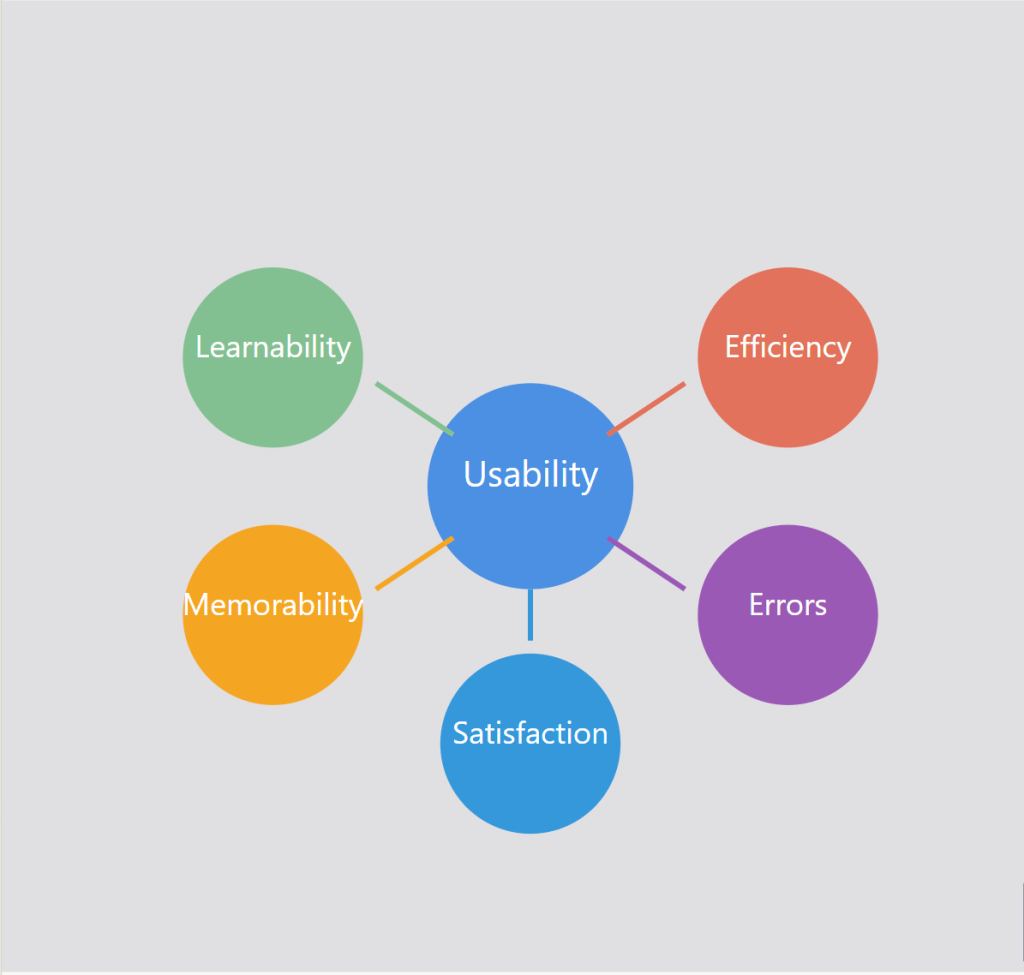
Usability goes beyond just making a functional product, it’s about creating interfaces that users can navigate efficiently. It is about making sure that users can accomplish their goals and tasks with minimal problems or confusion. Good usability allows users to focus on their objective rather than struggling with the interface. Usability is defined by 5 key components

1. Learnability: How easy is it for users to accomplish basic tasks? 

2. Efficiency: Once users have learned the design, how quickly can they perform tasks? 

3. Memorability: How easily can returning users pick up where they left off? 

4. Errors: How many errors do users make, how bad are these errors, and how can you recover from them? 

5. Satisfaction: How enjoyable is the overall user experience? 

Figure 1: The five key attributes of usability that contribute to great user experiences

The Importance of Usability 

While having nice features and visually appealing aesthetics are important, usability is the foundation that allows users to successfully engage with a product or service. It is the most important aspect of a website that is not seen. Without strong usability, even the most beautifully designed app will not be successful. Usability is necessary for survival in today’s digital landscape. There are many reasons as to why usability is so important: 

  • Improved User Satisfaction: Designs that are efficient and have no friction lead to happier, more satisfied users. When users have positive experiences using your product or service, it makes customers want to come back. 
  • Increased Productivity: Efficient interfaces allow users to find what they are looking for and accomplish their goals more quickly with less friction and frustration.  
  • Reduced Errors and Support Costs: A well-designed system with clear navigation and functionality will minimize errors, which will lower the need for customer support.  
  • Competitive Advantage and Brand Trust: In many different industries, usability can be a key differentiator between them. Products and services that are easier and more enjoyable to use will win over other competitors. Usability can directly influence how users perceive your brand. A smooth experience using your product or service builds trust and encourages users to return. 
  • Accessibility: Allowing people with disabilities to not only access but understand, navigate and interact with the product or service is a win. Having strong usability principles, such as keyboard accessibility and screen readers, helps ensure that products are usable by people with disabilities.  

Measuring and Improving Usability 

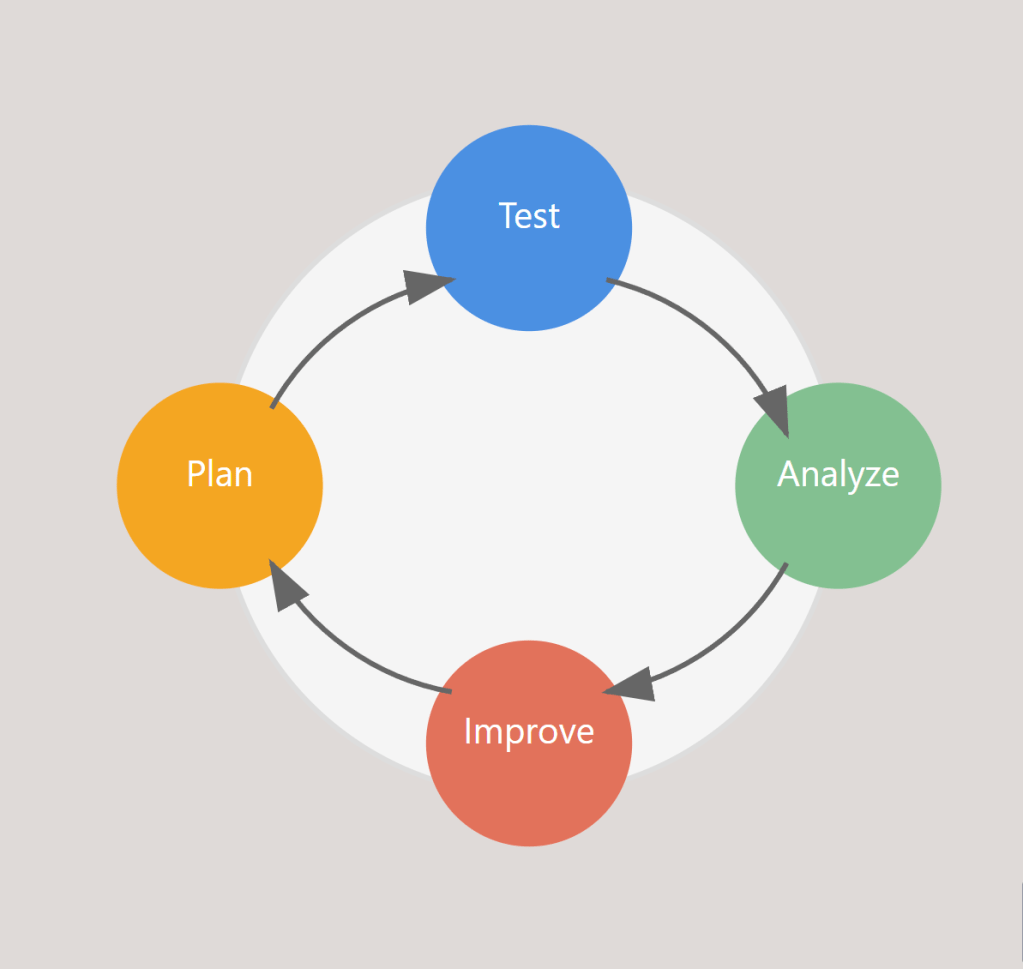
Having good usability isn’t something that can be achieved through guesswork or assumptions. It requires a user centric approach that involves testing, iterating, and continuous improvement. Collecting actual measurements is a natural step in improving usability and the path to excellent usability requires: 

Figure 2: The continuous cycle of measuring and improving usability

  • Goal-Directed Analysis: Start by identifying specific objectives like “Can users easily find products?” or “Are calls to action effective?” 
  • Usability Testing and A/B Testing: Observe real users navigating through your platform and gather feedback from them as they complete tasks. Comparing the performance of different design variations using A/B Testing while observing users will also help improve usability.  
  • Iterative Improvement: Continuously refining and improving based on feedback gathered is another key to making good usability. 
  • Performance Monitoring: Tracking metrics and analytics helps analyze user behavior data to identify pain points and opportunities for improvement.  

By incorporating usability testing and feedback throughout the design process, product teams can identify and address any issues with usability early on, which leads to more successful, user-friendly outcomes. 

Putting Usability First 

In today’s crowded digital landscape, prioritizing usability has become a critical part in a product or services success. By ensuring that your designs are intuitive, efficient, and satisfying, you are setting your users up for success and ultimately setting your business up for success as well. Whether you are developing a website, app, or digital service, remember that usability affects everything from SEO to site speed, and brand perception to end results. By investing in usability, you’re not just building a better product, you’re building a stronger business. Usability may be something working behind the scenes, but it definitely has a critical role to play.